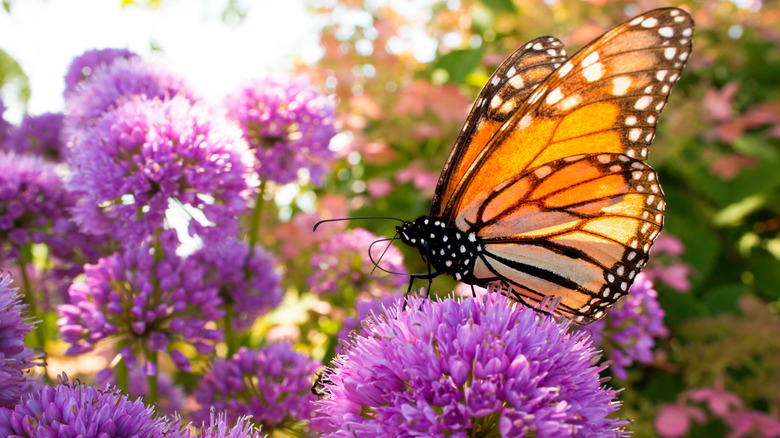
While basil and cilantro are both essential herbs in a kitchen, there’s another herb that’s fragrant, low maintenance, and sure to attract pollinators like bees, butterflies, hummingbirds, and even bats to your flourishing garden. Pollinators are important not only for your personal garden but also for the ecosystem at large, as they help to transport pollen between flowers, which helps to naturally fertilize plants. This is essential for both growing food and crops as well as our overall air quality and general ecosystem.
Thyme, which flowers during the warmer spring and summer months but grows year-round, is a great herb to add to your pollinator garden. While there are many different species and varieties of thyme available to plant, they will all attract pollinators to your garden.
Growing thyme plants from seeds can be a bit finicky, as sometimes getting the seeds to germinate properly can be difficult and, once the seedlings do start to grow, their growth can be a slow process. However for experienced gardeners and those willing to play the long game, thyme is a hearty herb that doesn’t require heavy maintenance. If you’re planting thyme merely for decorative purposes or to encourage pollinators to visit your garden, there isn’t much you need to worry about in terms of when to trim or harvest the plant other than occasional pruning, and you can let the beautiful, petite flowers bloom and enjoy its delicate blooms and colors.
Shortcuts for growing thyme
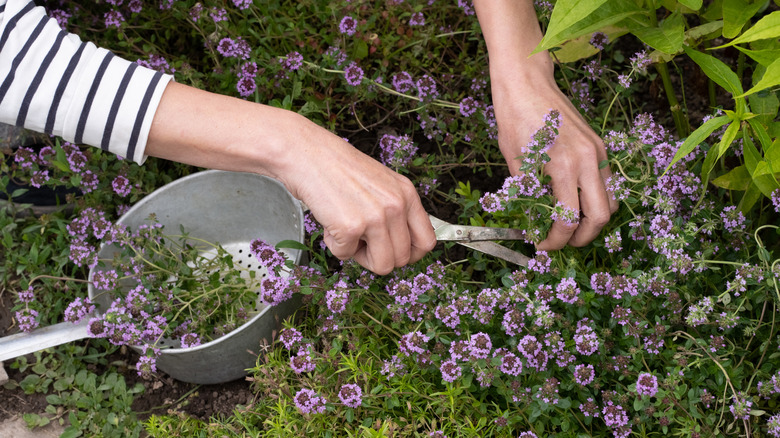
If you don’t have the patience for growing thyme starting with the seed, you can also easily grow the hearty herb from thyme clippings. This process is referred to as propagation, and there are so many herbs that can easily be propagated from cuttings, just like you would with certain house plants. Similar to how easy it is to propagate basil by placing a cutting from a mature basil plant and placing it in a jar of water in direct sunlight, you can place trimmed, healthy stems of thyme in water and wait for the roots to begin to grow, and later plant those rooted clippings in your garden.
Another option for propagating thyme, which is ideal to do in the summer and spring seasons, is to take a cutting of thyme from a healthy plant that is still more tender than hard and woody and remove the leaves from the bottom half of the stem, and then stick that exposed stem into a small pot with soil. Water the cutting regularly and new roots should grow in about two months. When seeking out thyme to propagate or grow, look for clamshells of thyme still growing on its roots, as you can transfer those roots to a pot with dirt as well.
For those without a traditional outdoor garden space like city or apartment dwellers, thyme grows well on balconies with lots of direct sunlight and on sunny windowsills. To use thyme for culinary purposes, be sure to harvest the stems before the flowers open, and dry the stems out a bit before using to cook with.