
Good things come to those who wait, and good barbecue comes to those who season their grill grates. We can’t lie to you; seasoning them can be a hassle, and one of the less enjoyable parts of an otherwise relaxing activity. But in most cases, you really do need to season them.
Seasoning your grill grates properly offers many benefits, not only for the performance of your grill, but also for your cooking results. Well-seasoned grill grates gain a non-stick surface, resist rust and other corrosion, last longer, and impart enhanced flavor to whatever you’re cooking. Before seasoning, most grill grates are just exposed metal, but seasoning them turns them into cooking surfaces ready to use again and again. When you season a grill grate, you heat oil past its smoke point in a molecular process called polymerization, wherein fatty acid chains degrade and reform into a bonded layer on the surface of the metal. This layer of polymerized oil is the protective coating we want on our grill grates.
It’s well-known that cast-iron pans and skillets require seasoning, and grill grates are no different. It’s not just cast iron, however, as some new stainless steel grill grates even benefit from at least an initial seasoning. Whether iron or steel, seasoning your grill grates also helps clean and burn off chemicals or materials from the manufacturing process, preparing them for your food.
There’s a reason to season your grill grates
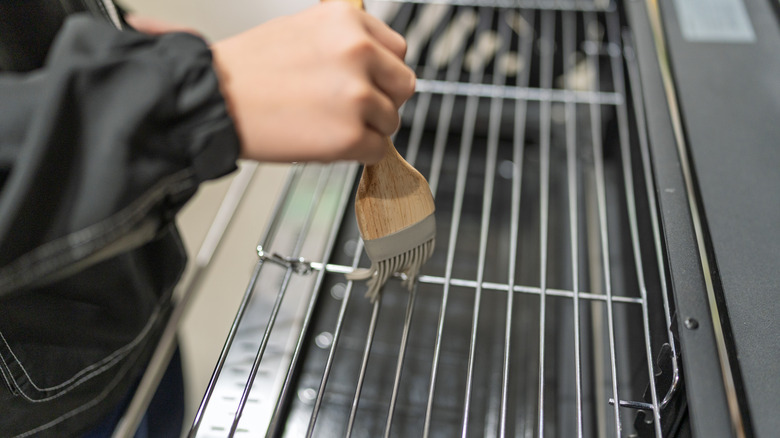
Aside from the type of metal a grill is made from, its use can also influence how necessary it is to season. Grills that regularly cook at high temperatures, such as those that burn gas, are usually able to burn off residual grease or debris from food, and can easily be scraped clean after use. Grill grates used in offset smokers or those used for low-and-slow cooking, whether pellet, coal, or wood-fueled, may benefit from initial and upkeep seasoning. These tend not to reach as high temperatures while cooking, meaning that food can more easily stick to the surface, and residual debris is likely to get caked onto the grate. Establishing and maintaining a healthy seasoning on these grill grates, however, should simultaneously provide a non-stick surface while protecting the metal.
In general, it’s advisable to clean your grill grates after every use, and re-season them every four months or so. At the bare minimum, you should re-season grill grates at the beginning and end of summer to increase their longevity. There are some grill grates you don’t have to season at all, such as cast-iron grill grates coated with porcelain or some stainless steel grill grates that are already coated with a non-stick layer. If you’re only using treated stainless steel grates for high-heat searing, you might get away with brushing fresh oil on them every so often or cleaning your grill grates with an onion. If you’re unsure, check the manufacturer’s instructions for advice.