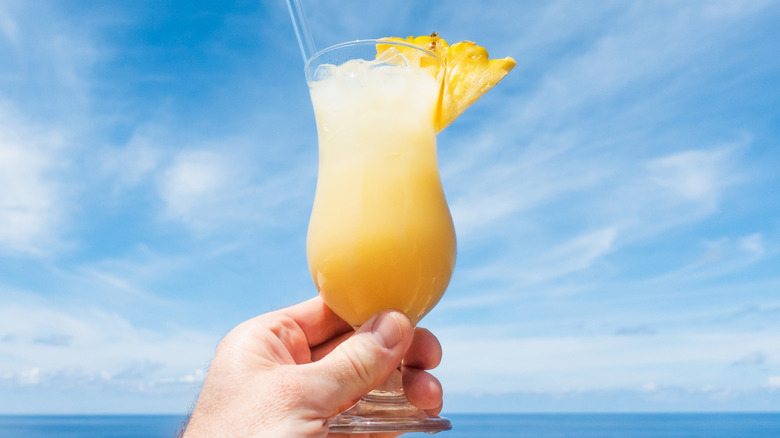
Strawberry palomas and jungle juice have their fans, and fair enough — there’s a reason both show up at every backyard party from Memorial Day through Labor Day. But if you’re the type who secretly wants something a little more interesting in your glass, it’s time to meet the Pago Pago. This one has been around since 1940, when it appeared in a liquor store’s promotional cocktail book published out of Chicago. It took a tiki revival for most people to hear about it, but better late than never.
Muddle fresh pineapple in the bottom of your shaker — this is the fruity heart of the drink. Add aged rum, fresh lime juice, green Chartreuse (a spicy-minty French herbal liqueur), and crème de cacao. Shake it hard, pour it into a coupe. Take a sip and see for yourself. The first hit should be bright and citrusy. Then it gets herbaceous. The finish is rounded off with just a slight hint of chocolate. Essentially, it drinks like a boozy, fruity bonbon with a botanical edge. Sophisticated without being fussy, complex without being busy — it’s exactly what a warm-weather cocktail should be.
How to pull off your first Pago Pago
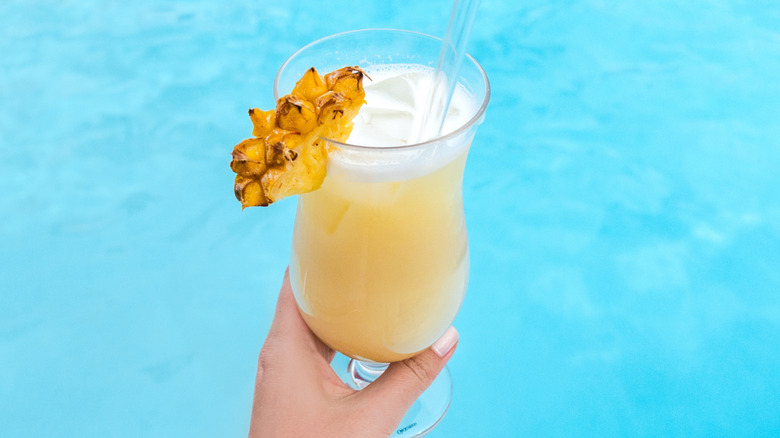
A few small choices here can push this from a good cocktail to a great one. Rum selection matters more than people expect. Pago Pagos are best done with a well-aged rum as the base, like Havana Club 7 or Bacardi 8. The cocktail really benefits from the funky, fruity depth of pricier bottles here, so if you’ve been saving those for a worthy drink, this is it. A four- or seven-year-aged rum like a Flor de Caña 4 also works well if that’s what you have on hand — just don’t use white rum.
Next, the pineapple. In a pinch, you can sub freshly muddled pineapple chunks for pineapple juice, but it’ll make a thinner, waterier result that doesn’t quite hold together the same way. The same goes for the lime — you’ll want to squeeze it fresh for maximum brightness.
On the Chartreuse front, don’t skimp or substitute if you can help it. The liqueur’s proof level and layered botanical character are what make the drink work. If you don’t have it handy, herbal liqueurs like Faccia Brutto Centerbe can be a good option (but dilute it with simple syrup, in a one-to-one ratio, to give it the same level of sweetness as Green Chartreuse) or génépy. And finally, if you want to take things one step further, a couple of dashes of Aztec chocolate bitters in the shaker ties the chocolate thread running through the drink — the effect’s subtle, but worth trying at least once.