We may receive a commission on purchases made from links.
Even folks who don’t frequent steakhouses recognize “ribeye” and “T-bone” as some of the more premium beef cuts money can buy. The question is, if you’re planning a steak dinner, which one actually gives you better value when you’re dropping cash at the butcher counter? The answer isn’t as straightforward as “whichever one’s cheaper.”
The per-pound math looks nearly identical: Choice-grade T-bones at Walmart clock in at $13.97 versus ribeyes at $14.87. T-bones are cheaper, case closed … until you take into account what you’re actually getting for the bucks you spent.
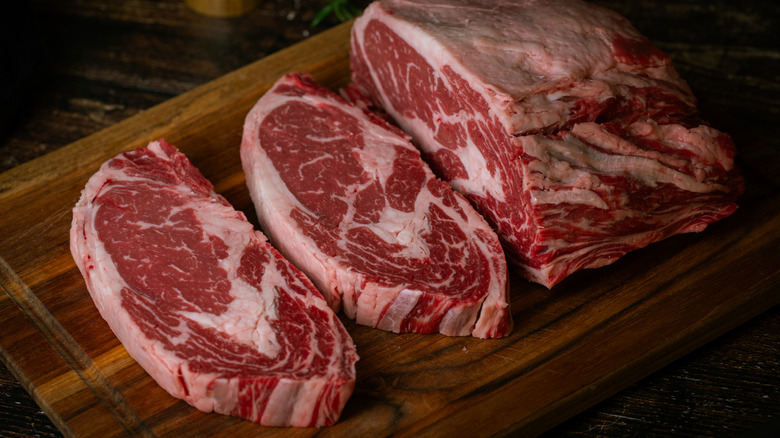
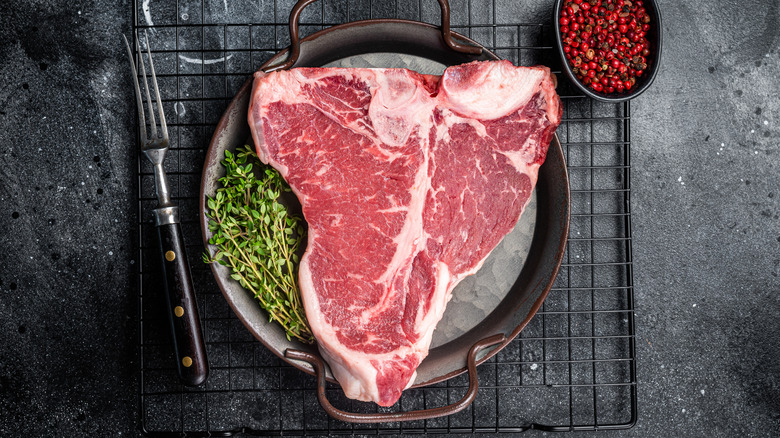
That one-dollar spread is basically meaningless once you start comparing how much meat you actually get. When you buy a T-bone, part of the price (about 25% of it) is a very heavy, dense lumbar vertebra (the “T” bone in the name), which is, of course, inedible. So that two-pound steak you managed to snatch for $27.94, at a cool $13.97 per pound? About $7 of it is inedible. You can’t cook with it, you can’t eat it — it’s essentially dead weight. The ribeye, typically sold as boneless cuts, means you’re paying for beef and getting beef.
The tasting experience is more important than the math
If value means maximum flavor on the plate, ribeye’s the better option. They’re famous for their richness because the rib section does very little work, so marbling is exceptionally high. All that extra intramuscular fat’s going to translate to a juicier steak with deeper, more pronounced beefiness on the palate.
A T-bone, on the other hand, is basically two steaks in one. You get a tenderloin on the small side, which is soft and mild due to its leanness, whereas the beefy strip steak is on the other. They’re separated by the T-bone, which, while being a loss on paper, actually contributes to the steak — it becomes a heat insulator on the grill and can keep the meat closest to it from overcooking, allowing the steak to stay moist and tender even through a high sear.
Both sound pretty great? That’s exactly the point — you’ll have a good time with either, especially if you upgrade from Choice to more heavily-marbled Prime-grade cuts. But to pick between them, think about the tasting experience you’d like. For a steak with uniform intensity and premium tenderness throughout, the ribeye’s your pick (in addition to being the smarter value, money-wise). If you want variety and two distinct beef personalities in one meal, the T-bone — despite its weight and bulk — is worth the trade-off.